
What is an RFID ceiling antenna?
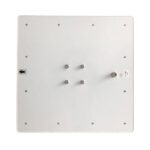
An UHF RFID ceiling antenna is a reader antenna specifically designed to be installed on or inside a ceiling. It can automatically read UHF RFID tags in the space below , eliminating the need for manual handling and walking around to read tags, unlike handheld devices.
The antenna is mounted on the ceiling, so it is not visually noticeable, while it can collect and read RFID tags in real time, providing convenience for retail stores with high foot traffic.
How does it work?
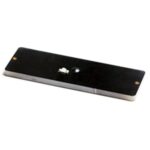
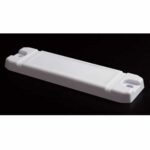
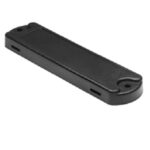
After receiving energy from an overhead RFID reader, an RFID ceiling antenna emits radio frequency energy to a specific area below it to read. Currently, there are two main types of RFID ceiling antennas : one is a wide-range, wide-angle reading antenna that reads as many tags as possible below; the other is a narrow-beam RFID antenna. This type of antenna features high gain, enabling it to read tags over long distances, but its radiation angle is very small, ensuring that it only reads tags within the required reading range and avoids reading other irrelevant tags. Our RFA122S is such a narrow-beam RFID ceiling antenna.
A tag can also be located by measuring signal characteristics (such as RSSI, or Received Signal Strength Indication) across multiple antennas or inventory rounds. Some systems can achieve area-level accuracy down to a radius of seven feet, while more sophisticated setups use triangulation between multiple antennas to locate the tag more precisely.
Why install an RFID antenna on the ceiling?
Installing antennas on the ceiling has several practical advantages compared to other locations:
Unobstructed coverage. Viewed from above, the antenna avoids the signal obstruction effects of shelves, clothes hangers, and people, creating a more consistent RF field throughout the sales area.
Hands-free operation. Employees no longer need to manually scan. Inventory visibility becomes continuous and automated, reducing manual labor, making inventory counting easier, more convenient, and more efficient .
Space efficiency. Ceiling antennas do not occupy floor space and do not interfere with customer flow or store layout. They blend into existing infrastructure rather than adding clutter.
Aesthetics. Modern ceiling readers and ceiling antennas are designed to be visually discreet and blend into the retail environment, without the industrial feel of doorways or vertical antennas.
Retail applications
Global retailers are deploying ceiling-mounted RFID antennas paired with readers to form RFID data collection systems to address persistent inventory issues . A primary use case is shelf availability: the system continuously monitors what’s in the sales area and alerts employees when specific SKUs, colors, or sizes are out of stock—usually still within the same shift when there’s time to restock from the warehouse.
Clothing store application
Apparel retail is one of the best fits for ceiling RFID technology. Apparel items are relatively easy to label, and the density of goods in sales areas—shelves, display stands, mannequins—makes manual scanning impractical, but ceiling reading is very effective.
In clothing stores, ceiling antennas provide real-time monitoring of merchandise in sales areas and warehouses. Employees receive alerts on their mobile devices, specifying the exact items that need restocking: a particular size, color, or style that is in stock in the back warehouse but missing from the display area. This eliminates the frustration common in retail—customers asking for sizes, employees searching the warehouse for minutes only to find the item in stock.
Inventory tracking
In terms of inventory tracking, ceiling-mounted RFID antennas transform inventory counting from a periodic chore into a continuous, behind-the-scenes process. Stores no longer need to close for manual, cyclical inventory checks; the system automatically tracks inventory around the clock.
This near real-time data input into the retail management system allows management teams to remotely view inventory levels across hundreds of stores.
This technology also reduces losses —inventory losses due to theft, misplacement, or mismanagement. Because each tagged item is continuously recorded, discrepancies become apparent immediately, rather than waiting until the next physical inventory count.
Loss prevention
Deploying the RFA122S ceiling antenna at store entrances and exits will trigger a system alarm when an unauthorized product is taken out of the store. High-value or sensitive items can be monitored for abnormal departures from the sales area, triggering alarms to security personnel , thus preventing loss and theft.
Some ceiling antenna systems are directly integrated with alarm hardware, including LED indicators and audible buzzers, to deter theft at detection points.
How to choose an RFID ceiling antenna
Choosing the right ceiling antenna requires balancing several technical parameters based on the specific deployment requirements.
Gain and beamwidth. Higher gain means a longer coverage range but a narrower beam—like the difference between a spotlight and a floodlight. For open retail areas requiring wide coverage, medium gain (5–6 dBi) with a wider beam is generally preferable. Narrow beam designs are better suited for focused areas or channels. The key is to match the beam pattern to the physical space, not just to maximize gain.
Polarization. Circular polarization is generally a safer choice for retail because labeled goods can be placed in any orientation—shirts draped on a table, boxes on a shelf, clothing on a hanger. Circular polarization sacrifices some original gain but is far more tolerant of label orientation than linear polarization.
Integration level. This determines whether you need a separate antenna that connects to a standalone reader, or an integrated unit built into the reader. Integrated top-mounted readers simplify installation and reduce wiring requirements.
Coverage per unit. Consider the coverage area provided by each antenna. Some systems cover a 50-foot area or a seven-foot radius per unit, while others may require a denser deployment to achieve equivalent coverage. Calculate the required number of units based on your store size and desired location granularity.
Deployment environment. Confirm that the antenna is suitable for your ceiling type, installation height, and environmental conditions. Retail environments are generally milder, but back-of-house and warehouse environments may have different requirements.
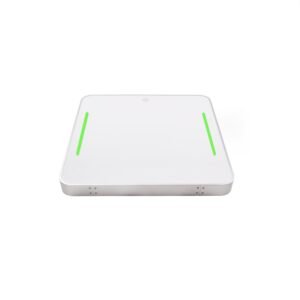
The RFA122S is a 12dbi high-gain antenna with a long reading range. Its features include a narrow beam, small reading angle, and indicator lights, making it ideal for installation at the entrances or exits of shops or warehouses.
in conclusion
UHF RFID ceiling antennas represent a shift in how retailers think about inventory visibility. Instead of viewing inventory checks as a periodic disruption, top-mounted RFID transforms them into a continuous, invisible process. The technology has matured to the point where retailers worldwide have deployed it in thousands of stores, delivering measurable sales growth and rapid ROI.
For apparel retailers and other high-SKU environments, the combination of hands-free operation, real-time replenishment alerts, and integrated loss and theft prevention makes ceiling-mounted RFID one of the most practical applications of the technology to date.